Beyond Basic Well Tests: What a Microbiology-Certified Water Testing Lab Detects in WNC Water
Private wells are part of everyday life across Brevard and the mountains of Western North Carolina. But clear, odor-free water does not necessarily tell you what is happening at the microbiological level, especially after heavy rain, well repairs, flooding, or changes around a rural property.
A basic water check can provide useful information, but microbiological testing answers a different question: Are indicator bacteria present that suggest the well or water system may have been exposed to contamination?
Quick answer: Microbiological water testing can look for organisms such as total coliform bacteria and E. coli using recognized laboratory methods. These organisms can help identify whether a private well may have a pathway for contamination. The exact organisms and parameters tested depend on the laboratory’s certification scope and the test panel ordered, so homeowners should confirm what their specific analysis includes.
What local readers should know
-
Total coliform testing is commonly used to identify whether conditions exist that may allow microorganisms to enter a well or water system.
-
E. coli testing provides more specific information about possible fecal contamination when included in the analysis.
-
Heavy rainfall and runoff around Transylvania County can make well protection and proper sampling especially relevant for mountain properties.
-
A laboratory result is only as useful as the sample itself, so proper collection, handling, and timely delivery matter.
-
Different water concerns require different tests. Microbiology testing does not replace testing for metals, minerals, nitrates, pH, or other chemical constituents.
What Does a Microbiology-Certified Water Testing Lab Look For?
A microbiology-certified water testing lab analyzes samples for specific microorganisms or microbial indicators within the scope of its certification, which may include total coliform, fecal coliform, E. coli, or other approved microbiological parameters. The exact testing available should always be confirmed with the laboratory before sampling.
For a private well owner in Brevard, this distinction matters because bacteria cannot reliably be identified by looking at, smelling, or tasting the water.
North Carolina’s rules for newly constructed private drinking water wells include testing for total coliform bacteria, with further analysis for fecal coliform bacteria or E. coli when applicable. The state also requires testing for a standardized group of chemical constituents.
That means microbiological testing is one part of understanding a well’s water quality, not a substitute for every other type of laboratory analysis.
Why Does Microbiological Well Testing Matter in Western North Carolina?
Microbiological well testing matters in Western North Carolina because private wells can be affected by conditions at the surface as well as the condition of the well and plumbing system. Mountain terrain, drainage patterns, storms, septic systems, and work performed around a well can all make proper well protection important.
Around Transylvania County, properties range from homes near downtown Brevard to wooded and rural sites toward Pisgah Forest, Rosman, Cedar Mountain, and Lake Toxaway.
The French Broad River watershed, steep terrain, abundant rainfall, and the prevalence of rural properties make water management a familiar concern in this part of the mountains.
Royal Water Works Inc helps local property owners better understand their water testing and treatment options. When microbiological analysis is appropriate, we focus on getting useful information that can guide the next step rather than relying on assumptions based on how the water looks or tastes.
What Do Total Coliform and E. Coli Results Tell You?
Total coliform and E. coli results provide different clues about microbiological water quality. Total coliform bacteria act primarily as indicator organisms, while detection of E. coli can indicate a more specific concern involving fecal contamination.
A total coliform result does not automatically identify one specific source of contamination. Instead, it can signal that bacteria have found a pathway into the water supply.
That pathway might need to be investigated around the wellhead, casing, cap, plumbing, treatment equipment, or surrounding property.
For local homeowners, the important point is not to diagnose the source from a laboratory result alone. Testing identifies what was detected in the submitted sample. The property and water system still need to be evaluated in context.
What Are Common Warning Signs That a Well Should Be Tested?
A private well should be considered for testing when conditions change around the water source, even if the water still appears normal. Laboratory testing is particularly useful because microbiological contamination may occur without an obvious change in taste, color, or odor.
Watch for situations such as:
-
The property has experienced unusually heavy rainfall or localized flooding.
-
Floodwater or runoff has reached or approached the wellhead.
-
The well cap, casing, or surrounding area has been damaged or disturbed.
-
Plumbing or well equipment has recently been repaired.
-
A property has been vacant and the water system is being returned to regular use.
-
There has been excavation, septic work, or significant site disturbance nearby.
-
Previous water testing produced a positive microbiological result.
-
You simply do not know when the private well was last professionally tested.
When Should Brevard Homeowners Call a Water Professional?
Brevard homeowners should call a water professional when testing identifies a concern, when a well has been exposed to flooding or damage, or when they are unsure which analysis fits the problem they are experiencing. Choosing the correct test is often more useful than ordering a broad panel without understanding its purpose.
You can safely monitor obvious conditions around the well, including drainage, visible damage to the wellhead, and changes in water appearance or odor.
DIY observation should stop short of assuming that clear water is microbiologically safe or trying to interpret a positive laboratory result without considering the well system.
If a sample comes back positive, the appropriate response can depend on what was detected and why it may be present.
What Common Local Conditions Can Affect Private Wells?
Common local conditions that can affect private wells include heavy precipitation, surface drainage, well construction issues, aging components, nearby septic systems, and disturbances around the well. In mountainous areas, the way water moves across a property can be just as important as what is visible at the wellhead.
1. Heavy rain and runoff: Western North Carolina receives substantial rainfall, and steep sites can move water rapidly across the landscape.
2. Wellhead vulnerabilities: A damaged cap, casing issue, or poor drainage around the well can create possible entry pathways.
3. Septic and property conditions: Many rural homes rely on both private wells and onsite wastewater systems, making proper siting and maintenance important.
4. Repairs and construction: Well service, plumbing work, excavation, and other property changes can justify follow-up testing.
5. Unknown well history: Older mountain homes sometimes change ownership without complete records of previous water testing or well maintenance.
How Can Homeowners Help Protect Their Well Water?
Homeowners can help protect well water by keeping the wellhead accessible, maintaining drainage away from the well, watching for physical damage, and testing when conditions warrant it. Preventive attention is especially valuable before a small structural or drainage problem becomes a repeated water-quality concern.
Walk around the well periodically and look for obvious casing damage, loose components, standing water, erosion, or changes caused by landscaping and construction.
After severe storms around Brevard and Transylvania County, checking the area around a private well is a sensible property-maintenance step.
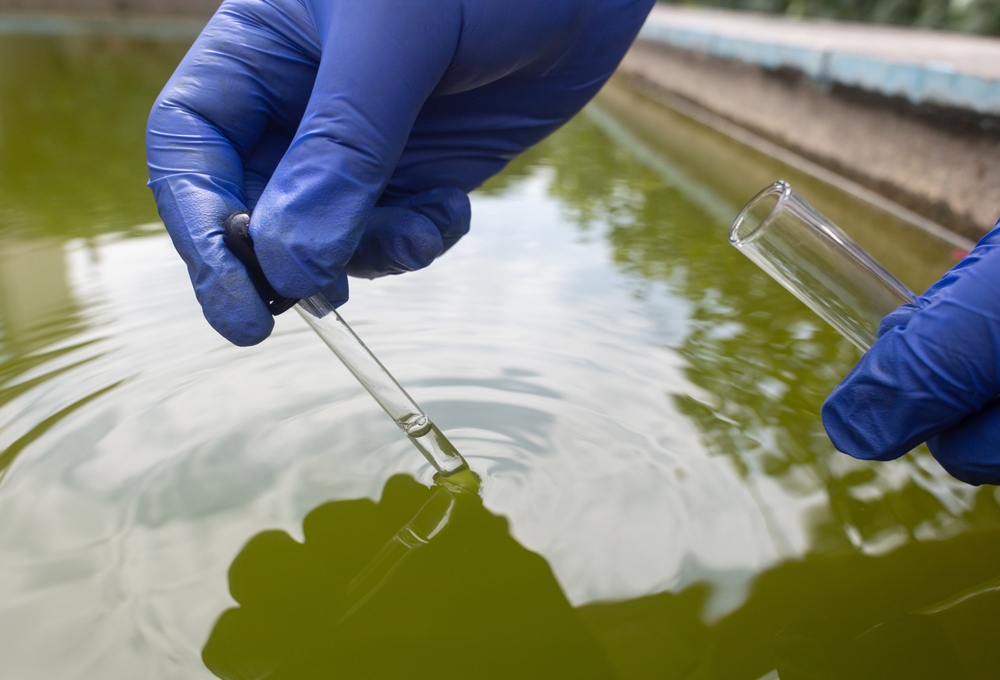
Testing should also follow proper sample collection procedures. Microbiology samples require careful handling because poor technique can affect the usefulness of the result.
What Results Should You Expect From Professional Water Testing?
Professional water testing should give you laboratory findings for the specific parameters ordered, not a universal declaration that the water is free of every possible contaminant. A meaningful result tells you what was analyzed and whether those organisms or constituents were detected according to the method used.
This is why choosing the test panel matters.
A microbiological analysis and a chemical analysis answer different questions. North Carolina’s testing requirements for new private wells, for example, include both bacteriological testing and numerous chemical constituents.
If your concern involves bacteria, iron staining, metals, pH, odor, sediment, or another water-quality issue, the appropriate testing strategy may differ.
What Mistakes Do Well Owners Make With Water Testing?
The most common well-testing mistakes involve testing too narrowly, collecting samples incorrectly, or assuming one good result answers every water-quality question.
Mistake: Judging water only by appearance.
Consequence: Microbiological issues may not create a visible change.
Better approach: Use appropriate laboratory testing when there is a reason for concern.
Mistake: Assuming every water test checks for bacteria.
Consequence: The ordered panel may not answer the question you actually have.
Better approach: Confirm the parameters included before sampling.
Mistake: Treating one positive result as a complete diagnosis.
Consequence: You know something was detected but may not know the entry point.
Better approach: Pair results with evaluation of the well and water system.
Mistake: Ignoring sample procedures.
Consequence: Poor collection can reduce confidence in the result.
Better approach: Follow the laboratory’s collection, storage, and delivery requirements carefully.
What Is a Common Well-Testing Scenario in Transylvania County?
A common local scenario is a homeowner deciding to test a private well after unusually wet weather, property work, or an unknown testing history. The water may still look perfectly normal, but the owner wants objective information instead of relying on appearance alone.
The appropriate first step is determining what question needs to be answered.
If microbiological contamination is the concern, a bacteriological analysis may be appropriate. If the concern is staining, taste, corrosion, minerals, metals, or another water characteristic, additional testing may be needed.
This is a common scenario rather than a specific Royal Water Works Inc customer case study.
What Water Services Can Help After Testing?
Water services after testing should be selected according to the laboratory findings and the condition of the well or treatment system. Testing helps establish what is present, while inspection, maintenance, disinfection, treatment, or additional investigation may address the underlying concern.
We can help area property owners understand practical next steps based on their water concerns and available test information.
Should You Use a Basic Test or More Targeted Laboratory Testing?
A basic test is useful when it answers the specific question you have, while targeted laboratory testing is better when you need information about particular microbiological or chemical parameters. More testing is not automatically better. The goal is to select analysis that matches the concern.
For example, a homeowner concerned about bacterial contamination needs different information than someone troubleshooting orange staining, unusual pH, sediment, or mineral buildup.
A qualified laboratory should also be able to identify the parameters for which it is certified. North Carolina maintains certification programs and laboratory listings, but certification can apply to specific analyses rather than every possible water test.
Where Do We Serve Around Brevard?
We serve water-related needs in Brevard and the surrounding Western North Carolina area. Depending on service availability, that may include properties throughout Transylvania County and nearby mountain communities such as Pisgah Forest, Rosman, Cedar Mountain, and Lake Toxaway.
What Can Happen If a Water-Quality Concern Is Ignored?
Ignoring a water-quality concern can allow an unresolved well, plumbing, drainage, or treatment problem to continue without identifying its cause. The practical cost is often uncertainty, repeated testing, unnecessary treatment, or delayed correction of the actual issue.
For mountain homeowners, investigating a concern early can also help separate microbiological questions from unrelated water problems such as mineral content, sediment, staining, or equipment performance.
Frequently Asked Questions About Well Water Testing in WNC
Does clear well water in Brevard still need bacterial testing?
Yes, clear well water can still require bacterial testing because appearance alone does not establish microbiological quality. Total coliform and E. coli are detected through laboratory analysis, not visual inspection. Testing can be especially appropriate after flooding, repairs, well damage, or when the home’s previous testing history is unknown.
What bacteria are commonly checked in private well water?
Total coliform bacteria and E. coli are common microbiological indicators used in well-water evaluation. North Carolina’s rules for new private drinking water wells require total coliform testing and further analysis for fecal coliform or E. coli when applicable. Other analyses depend on the laboratory and test ordered.
Does a positive total coliform result mean E. coli is present?
No, a positive total coliform result does not by itself mean E. coli is present. Total coliform organisms are used as indicators that a pathway for bacterial entry may exist. Follow-up analysis and evaluation help determine whether E. coli or another specific concern is involved.
Should I test my well after heavy rain in Transylvania County?
Testing may be appropriate after heavy rain if flooding, runoff, or standing water reached the well or if you suspect the wellhead was compromised. Mountain terrain can move surface water quickly. The condition of the well, its construction, drainage, and actual exposure should guide the decision.
Can one laboratory test tell me everything in my Brevard well water?
No, one limited test does not necessarily identify every possible water-quality issue. Microbiological, inorganic, mineral, and other analyses measure different parameters. The best starting point is identifying the concern and confirming exactly what the laboratory panel includes before collecting a sample.
Who oversees private well testing in North Carolina?
North Carolina private-well testing requirements involve the Division of Public Health and local health departments. For newly constructed private drinking water wells, state rules specify bacteriological and chemical analyses. Existing well owners can also pursue testing when water-quality concerns or property conditions justify it.
Why does sample collection matter for microbiology testing?
Sample collection matters because microorganisms can be introduced through improper handling, containers, sampling points, or collection techniques. North Carolina rules specify aseptic collection procedures for bacteriological samples from new wells. Following laboratory instructions carefully helps make the resulting analysis more useful.
What should I do after a positive bacteria result?
A positive bacteria result should lead to evaluation of both the laboratory finding and the water system rather than guesswork. The appropriate response can depend on what was detected, the condition of the well, recent weather or repairs, and possible contamination pathways. Additional sampling or corrective work may be recommended.
Get Clearer Answers About Your WNC Well Water
Understanding what is actually in your well water gives you a stronger basis for deciding what to do next. For property owners throughout the Brevard area, thoughtful testing can help separate microbiological concerns from the many other water-quality issues found in private well systems.
Know What Your Well Water Is Telling You
We help local property owners take a more informed approach to well water testing and treatment without assuming that every property needs the same solution.
Categorised in: Water Testing